A water-soluble systemic fungicide for the control of diseases in crops as indicated.

Citrus
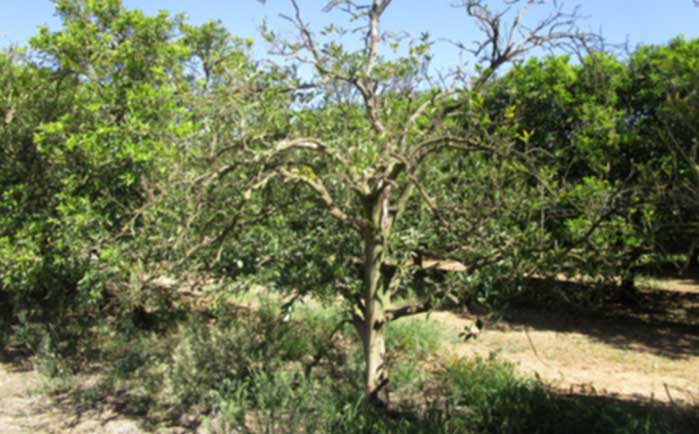
  • A water-soluble systemic fungicide for the control of root and collar rot (Phytophthora spp.) on citrus.
  • FRAC fungicide group code 33.
  • PHOSPHITE 400 SL is a systemic fungicide absorbed by trunk and leaves and translocated to the roots.
  • PHOSPHITE 400 SL can be applied as a trunk paint treatment or as a foliar spray.
  • Use PHOSPHITE 400 SL only on actively growing trees when sufficient sap flow is taking place.
  • Do not apply to plants that are oxygen-deprived within 6 days after heavy rains or when soil is waterlogged.
  • Stop application about 1 hour before an air temperature of 30 °C is reached.
  • Do not apply PHOSPHITE 400 SL within a week before, or after, a copper application.
  • Use plastic or fibreglass containers when using the product as a trunk paint treatment.
  • Do not treat easy-peeler varieties which tend to set very heavy crops.
  • Systemic translocation of PHOSPHITE 400 SL to the roots of citrus trees is enhanced when trees are not flushing. Do not apply the product when the trees are flushing.

Commence treatment just after the rainy season has started and repeat at 6 to 8 week intervals during the rainy season.

Trunk paint treatment
Mix in a 50 : 50 ratio with water. Paint the whole trunk from ground level upwards for 35 cm.

Foliar application
500 mℓ / 100 ℓ water. Apply as a light cover spray at 1800 to 2000 ℓ spray solution per hectare on medium to large
trees.

N/A

Grapes
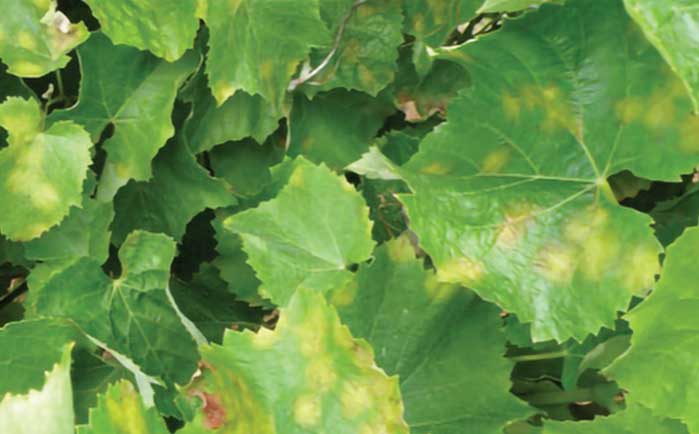
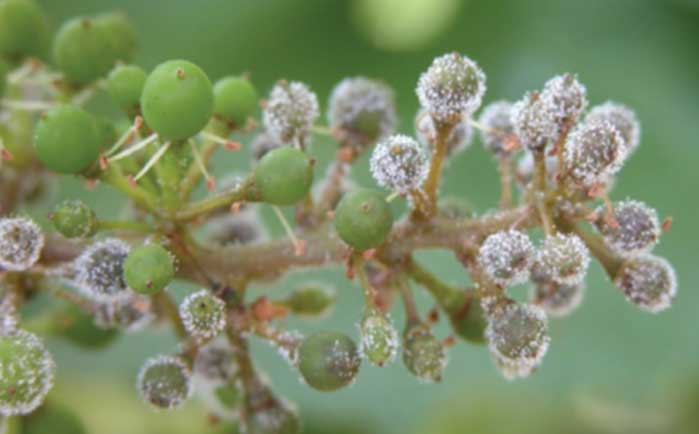
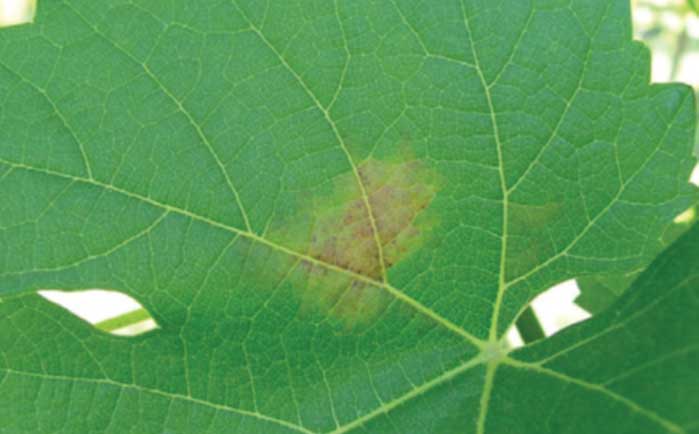
  • A water-soluble systemic fungicide for the control of Downey Mildew (Plasmopora viticola) on table and wine grapes.
  • PHOSPHITE 400 SL is an phosphonate fungicide and belongs to FRAC group code 33.
  • Rapid uptake compared to conventional phosphates.
  • Controlled release of P through various stages of crop growth.
  • Enhanced plant and root development.
  • Improved plant health, by strengthening cell walls.
  • Low environmental toxicity.
  • Slows the growth of the pathogen and inhibits the formation of spores.
  • Multiple sites of action, which assist to counter the development of resistance.
  • Strong acropetal and basipetal movement within the plant.
  • Only use PHOSPHITE 400 SL on actively growing vines when enough sap flow and shoot growth is taking place.
  • Do not treat plants if the leaves are wet due to rain or dew as this can lead to possible scorching.
  • Apply early morning or late afternoon but cease application 1 hour before an air temperature of 30 °C is reached.
  • Do not apply within a week of copper application (before or after).
  • Higher dosage rate can cause yellowing of young leaves.
  • Always use higher rates (400-500 mℓ/100ℓ water) for effective control against Downy Mildew.

From 10-15 cm shoot length up to pea berry stage:
- 300-500 mℓ plus 120-200 g Mancozeb (800 g/kg) per 100 ℓ water.
From pea berry stage to harvest:
- 300 mℓ/100 ℓ water

N/A

Insights

No product-specific insights yet, but read related articles below.
Swartvlek, Alternaria, en valskodlingmot – sitrusprodusente het hul hande vol. In hierdie artikel verduidelik Vivian Butler hoe Suid-Afrika se sitrusbedryf die hele jaar deur chemie

ACTIVE INGREDIENT

potassium phosphite 560 g/l (Phosphorous acid equivalent) 400 g/l

PACKAGING

20L

REG. NO.

L 7468 Act No. 36 of 1947
N-AR 0996 / W1301399

REGISTRATION DETAILS

PHOSPHITE 400 SL. Reg. No. L 7468 Act No. 36 of 1947. Active ingredient: potassium phosphite 560 g/l (Phosphorous acid equivalent) 400 g/l. Danger. Hazard Statements: Causes severe skin burns and eye damage. May cause respiratory irritation. Precautionary Statements: Do not breathe mist, vapours and spray. Wear impervious rubber gloves and boots, protective clothing and chemical safety goggles.

Registration holder:VILLA CROP PROTECTION (PTY) LTD.
Co. Reg. No. 1992/002474/07
PO Box 10413, Aston Manor, 1630
Tel. (011) 396 2233

CROPS & TARGET

CitrusPotatoesTable GrapesWine grapesCitrus - Collar RotCitrus - Root rotPineapples - Root and collar rotPotatoes - Late blightTable Grapes - Downy mildewWine grapes - Downy mildew

Insights

Swartvlek, Alternaria, en valskodlingmot – sitrusprodusente het hul hande vol. In hierdie artikel verduidelik Vivian Butler hoe Suid-Afrika se sitrusbedryf die hele jaar deur chemie
Addressing hard water is not enough

By Dr Brian de Villiers Many herbicides such as glyphosate, clethodim, some SU’s and various others are affected by salt antagonism from carrier water. If

Adjuvants become more important under marginal conditions

By Dr Brian de Villiers Adjuvants are often omitted or replaced with an unregistered product without any negative consequences. Growers then assume that adjuvants are

Adjuvants should help, not harm

By Dr Brian de Villiers The word “adjuvant,” means “to help.” These products are therefore used exclusively to help crop protection products (CPPs) reach their

Adjuvants: Are they an integral component of spray mixtures or just snake oils?

By Dr Brian de Villiers Adjuvants are registered with many crop protection products (CPP) and are added to an immense amount of spray mixtures. Are

Adverse conditions are the true test for adjuvants

By Dr Brian de Villiers In our interactions with stakeholders we sometimes learn that growers had replaced an adjuvant registered for use with a particular

Ammonium sulphate

By Dr Brian de Villiers Ammonium sulphate was first applied commercially with glyphosate as a water conditioner about 40 years ago. It’s hard to believe

Ammonium sulphate and magnesium antagonism

By Dr Brian de Villiers There have been various recent allegations that ammonium sulphate is not effective because it is unable to overcome magnesium antagonism

Are there really differences between adjuvants?

By Dr Brian de Villiers Over the past few years Villa has tried to encourage the correct use of adjuvants toincrease and stabilize the efficacy

Bedekking en opname

Deur Brian de Villiers Daar is twee noodsaaklike prosesse wat die effektiwiteit van sistemiese gewasbeskermingsprodukte (GBP’e) verseker. Die eerste is bedekking, wat deur behoud en

Behoud is belangrik op alle plantgroottes en oppervlaktes

By Dr Brian de Villiers Desember 2024 Ons beklemtoon dikwels die belangrikheid daarvan om genoeg spuitdruppels tot by alle dele van die plant te kry.